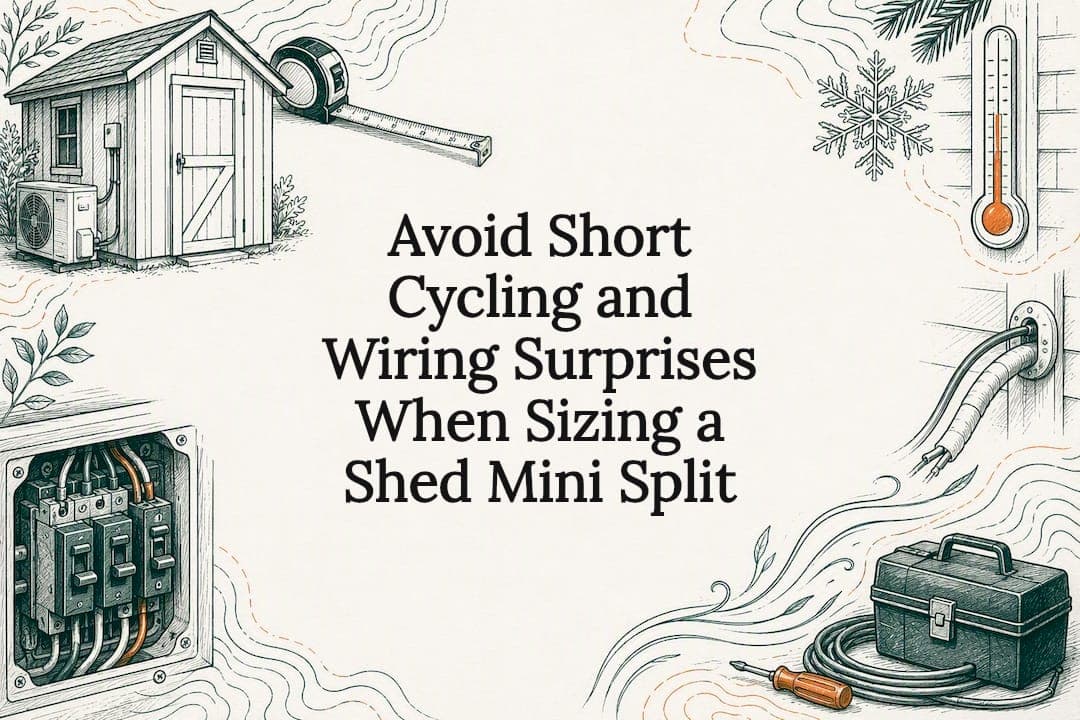
Mini splits are usually the best year-round option for a finished, insulated shed, delivering both heat and air conditioning without ductwork. Before you buy anything, measure the square footage, note your insulation level, and check whether the shed already has 115V or 230V electrical service. Most small sheds typically require a mini split sized within the small to moderate BTU range appropriate for their size, but if your climate swings to extremes, a proper heat-loss calculation beats any rule of thumb.
TL;DR:
- Proper electrical wiring and a heat-loss calculation are critical to ensure the mini split can operate efficiently during harsh winters and avoid costly upgrades.
- Oversized units short-cycle, leading to dampness and discomfort, so sizing should be based on actual shed characteristics rather than generic rules.
- Installation requires careful placement of indoor and outdoor units, proper refrigerant line routing, and a dedicated electrical circuit; DIY kits may not cover electrical or sizing complexities.
- Maintenance includes regular filter cleaning, coil checks, and seasonal inspections, which are essential for systems expected to last more than a decade.
- The total cost varies widely depending on system capacity, electrical needs, and labor, with significant savings possible through proper sizing, permits, and rebate programs.
Table of Contents
- Sizing a Shed Mini Split: How Many BTUs Do You Need?
- What Are the Installation Requirements for a Shed Mini Split?
- How Much Does a Mini Split Cost for a Shed?
- Should You DIY Your Shed Mini Split or Hire a Pro?
- Maintaining a Shed Mini Split for the Long Haul
- What Are the Alternatives to a Mini Split for Shed Heating and Cooling?
- What the Data Actually Tells You About Shed Comfort
- Get a Shed Mini Split Sized and Installed Right
- Sources
- FAQ
Sizing a Shed Mini Split: How Many BTUs Do You Need?
Getting the size right matters more than picking a brand. A ductless mini-split heat pump works efficiently precisely because it's matched to the space, not because bigger automatically means better. Oversizing is the single most common mistake shed owners make, and it backfires in a specific way: an oversized unit cools or heats the room fast, then shuts off before it has a chance to pull moisture out of the air. That short-cycling leaves you with a shed that feels cold and damp instead of comfortable.
As a starting point:
- For small sheds up to about 150 square feet, a mini split system sized for lower BTU output is often suitable assuming decent insulation and standard use.
- Medium-sized sheds around 200 to 300 square feet generally require units with moderate BTU capacities, influenced by factors like ceiling height and window area.
- Smaller sheds such as an 8x10 space that is well insulated can use lower-capacity units, while uninsulated versions may require higher capacity to compensate for heat loss.
- Larger sheds like 10x20 typically need units with higher BTU output or multiple zones if divided for different uses.
Adjust upward for south-facing windows, metal roofing without a radiant barrier, vaulted ceilings, or a shed packed with electronics that generate their own heat. Adjust downward for anything shaded, well-insulated, or used only a few hours a week.
A full heat-loss calculation earns its cost when you're heating through a cold winter, when the structure has minimal insulation, or when the shed doubles as a workshop with tools, a mini-fridge, or a kiln adding load. Guessing is fine for a mild-climate hobby room. It's a bad idea for a Maine woodshop running through January.
Pro Tip: If you're torn between two sizes, size down slightly rather than up. A mini split that runs a little longer per cycle dehumidifies better than one that's constantly starting and stopping.
What Are the Installation Requirements for a Shed Mini Split?
Installing a mini split in a shed involves both refrigerant plumbing and electrical work, and neither is a place to improvise. Here's the sequence that matters:
- Pick the indoor head location first. Wall-mounted heads work in most sheds, positioned high enough to avoid drafts on your workbench but not so high they short-cycle off ceiling heat. Ceiling cassettes suit sheds with tight wall space but cost more to install.
- Plan the lineset penetration. The refrigerant lineset, drain, and electrical wiring pass through a hole typically around three inches in diameter. Routing it through a wall rather than a roof cuts down on leak risk and keeps water out during storms.
- Confirm your electrical service. Small plug-in DIY kits often run on standard 115V/120V household circuits, while most hardwired single-zone systems need dedicated 208 to 230V service. If your shed only has a basic 15-amp outlet run from the house, you'll likely need a new circuit, and possibly a subpanel.
- Site the outdoor condenser with clearance in mind. Give it space on all sides for airflow, mount it on a pad or bracket above expected snow depth, and use anti-vibration pads so the compressor doesn't hum through a wood-frame wall.
- Route condensate correctly. Gravity drainage works if the indoor head sits high enough above grade. Raised sheds or those with tricky drain paths usually need a small condensate pump.
A proper electrical check is often the gating item for the whole project, since many backyard structures were never wired for anything beyond a light bulb and an extension cord.
How Much Does a Mini Split Cost for a Shed?
Equipment prices for single-zone shed mini splits can range from lower-cost DIY kits to units costing up to a couple thousand dollars or more for higher-capacity, cold-climate models. Labor adds a separate range on top of that: simple installs with an existing electrical circuit and a short lineset run tend toward the lower end, while jobs requiring a new circuit, a panel upgrade, or a longer lineset push toward the higher end.
A few things reliably inflate the estimate:
- Running a new dedicated circuit from the main panel, especially if the shed is far from the house.
- Long lineset runs beyond the manufacturer's standard included length.
- Structural work like reinforcing a wall for the outdoor bracket or adding insulation before install.
- A remote condensate pump for sheds with poor natural drainage.
Mini splits carry a higher upfront cost than window or portable units but tend to pay that back through lower operating costs and quieter, more consistent performance over the years.
Before scheduling anything, check with your town or city on permit requirements. Many jurisdictions require an electrical permit for new circuit work even on a small outbuilding. Reputable installers usually handle this paperwork as part of the job rather than leaving it to the homeowner. It's also worth asking upfront about heat pump rebates, since state and local energy efficiency programs frequently apply to mini splits and can meaningfully lower the net cost.
Should You DIY Your Shed Mini Split or Hire a Pro?
Plug-and-play DIY kits, like the widely sold MRCOOL DIY Easy Pro 9k BTU system, promise no-vacuum installation with pre-charged linesets. That covers the refrigerant side. It doesn't cover mounting the outdoor unit correctly, tying into your electrical panel safely, or getting the sizing right for your specific shed.
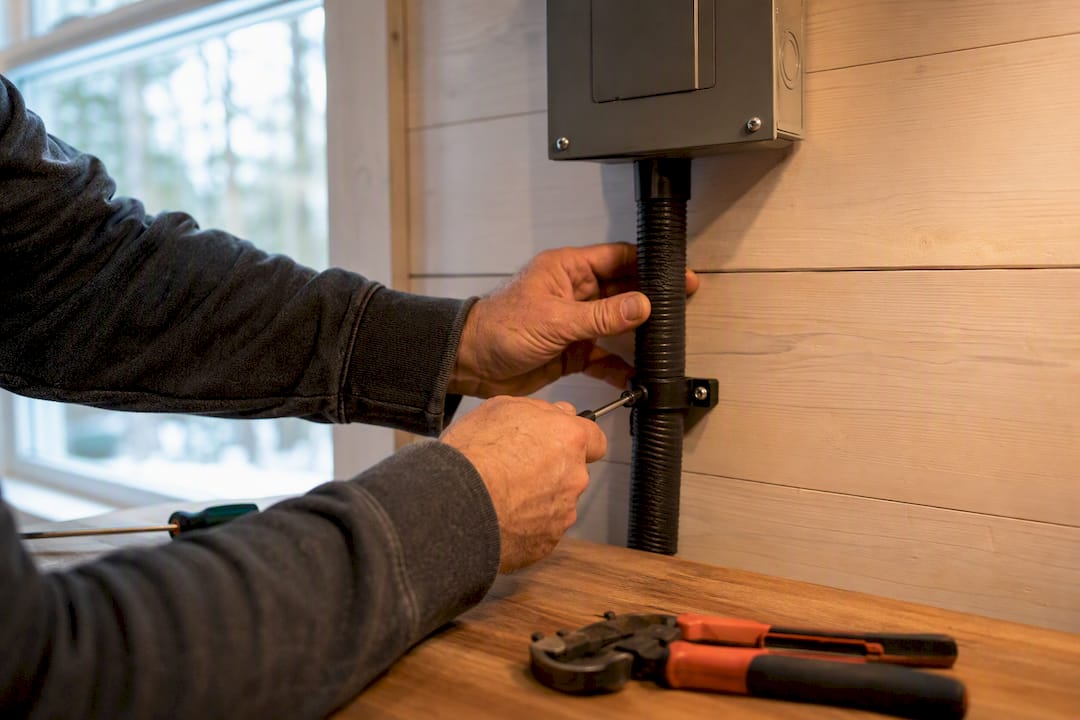
Professional installers earn their fee through things that are hard to shortcut: accurate sizing from an actual heat-loss calculation, correct refrigerant handling, code-compliant electrical work, and tuning for cold-climate performance if you're heating through winter. DIY kits shift the risk and the warranty burden onto you, which is fine for a casual hobby space but riskier for a shed you use daily or heavily.
Before hiring anyone, ask:
- What method do they use for sizing, and will they show the heat-loss numbers?
- What's included in the quoted lineset length, and what's the cost per extra foot?
- Do they handle the permit filing themselves?
Pro Tip: A quote that skips the heat-loss question entirely is a red flag. Anyone sizing a system by square footage alone, without asking about insulation or windows, is guessing.
Maintaining a Shed Mini Split for the Long Haul
A mini split that's sized right and maintained well will keep its efficiency for well over a decade. Skip maintenance, and even a correctly sized unit loses capacity within a couple of seasons.
The basics:
- Clean or replace the indoor filter every one to three months, more often if the shed is dusty from woodworking or yard equipment.
- Check the outdoor coil twice a year for leaves, grass clippings, and ice buildup.
- Clear the condensate drain line before it clogs and backs up into the indoor unit.
- Schedule a seasonal inspection ahead of your heaviest use months, whether that's the coldest week of January or the hottest stretch of July.
Correct sizing and consistent upkeep work together. A right-sized unit that's neglected still degrades; an oversized unit that's perfectly maintained still short-cycles. You need both pieces in place.
Some providers have installed over 200,000 heat pumps, offering systems designed to perform in very cold temperatures, custom sized through detailed heat-loss calculations rather than rough square-footage guesses. For readers who'd rather not manage filter schedules and seasonal checks themselves, the Annual Cleaning Plan and Maine Heat Pump Care Plan cover recurring maintenance, and full installation and service options are available for anyone planning a new shed system from scratch.
What Are the Alternatives to a Mini Split for Shed Heating and Cooling?
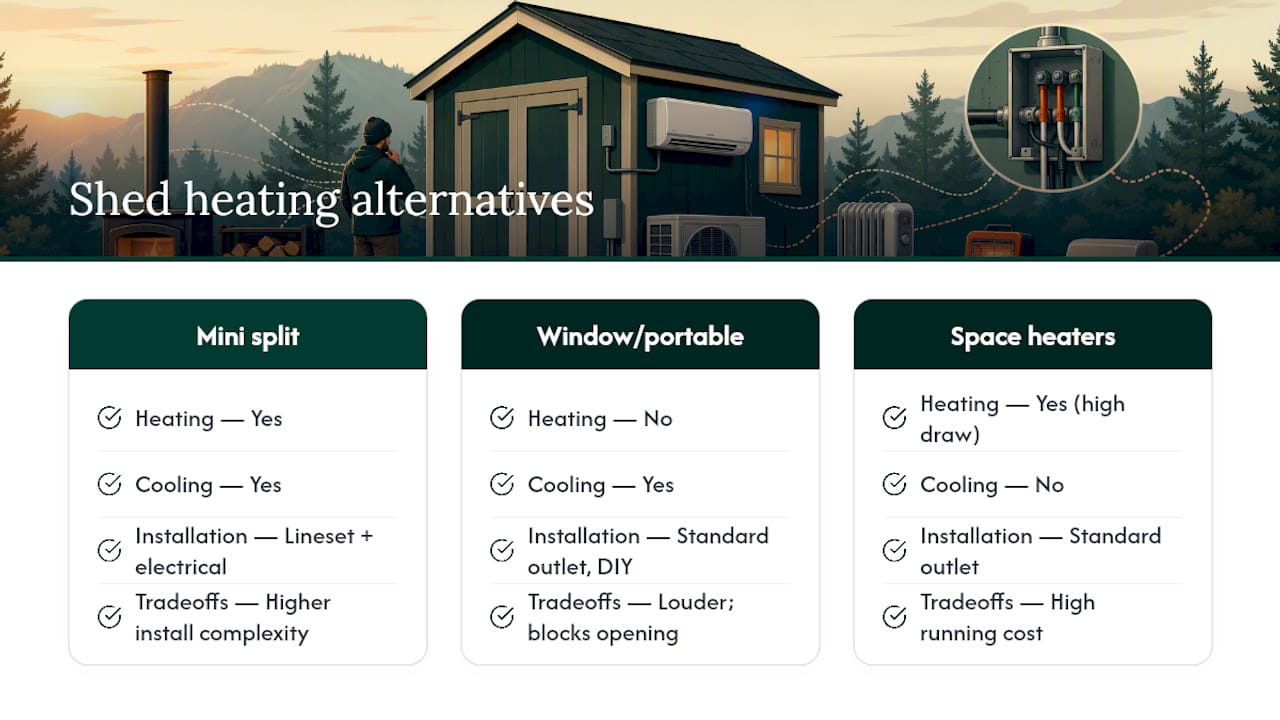
Window and portable air conditioners remain the most common alternative, and retailers market them as easy DIY solutions for sheds. A window unit costs less upfront and needs no lineset or electrical upgrade beyond a standard outlet. It also only cools, does nothing for heating, blocks part of a window or wall opening, and runs noticeably louder than a mini split's indoor head.
Portable electric heaters and small space heaters handle winter heat cheaply but pull heavily on a standard circuit and can't touch summer cooling at all. For sheds used only occasionally, that might be enough. For anything used daily through a Maine winter, the math on running a space heater for hours stops making sense next to a heat pump's efficiency.
Wood stoves and pellet stoves work in larger, well-ventilated shops but require chimney installation, regular fuel handling, and carry fire code and insurance implications many town permits flag immediately.
For a shed that needs genuine year-round comfort, cooling in summer and heat in winter, a mini split is the only option on this list that does both jobs from one system. Anything else means running two separate appliances and accepting the tradeoffs of each.
What the Data Actually Tells You About Shed Comfort
Most guides treat shed heating and cooling as an afterthought bolted onto garage advice. That's backwards. A finished shed used daily as a workshop, studio, or office has real comfort demands, and undersizing or skipping the heat-loss math costs you twice: once in comfort, once in a utility bill that never quite makes sense.
The conventional wisdom leans hard on "bigger is safer" sizing. It isn't. An oversized mini split in a small shed is arguably worse than an undersized one, because short-cycling wrecks both comfort and dehumidification while still using more power than a properly matched unit running longer, gentler cycles.
If you take one thing from this guide, prioritize the electrical check before you fall in love with a specific unit. Plenty of homeowners pick their BTU size, order a system, then discover the shed's wiring can't support it without a new circuit. Do that check first, and everything downstream, sizing, budget, and installer conversations, gets a lot simpler.
— John
Get a Shed Mini Split Sized and Installed Right
Guessing at BTUs or hoping a plug-and-play kit handles your electrical work is how shed projects go sideways. Hitamaine takes a different route: every install starts from a real heat-loss calculation, not a square-footage guess, and systems are designed to hold their output down to −22°F, which matters if your shed sees a real Maine winter.
That approach fits anyone who wants a shed that's genuinely comfortable in July and January, not just cooled in summer with a window unit and heated with a space heater in winter. If you're weighing a new install, the installation planning page walks through how sizing works before you commit to equipment. And if you already have a system and want to keep it running efficiently for years, the service and maintenance options cover everything from one-time deep cleaning to ongoing care. Request a free assessment and get a heat-loss based quote instead of a guess.
Sources
- Choosing the Right Air Conditioner for Sheds and Garage Spaces: Tips for HVAC Contractors | GREE Comfort
- Mini Split Systems for Sheds and Small Outbuildings— Comfort Temps
- Adding Air Conditioning to Your Backyard Office Shed: Practical Tips
FAQ
Can You Put a Mini Split in a Shed?
Yes, mini splits work well in sheds as long as the structure is insulated and has, or can support, adequate electrical service. The main constraints are lineset routing, indoor head placement, and whether the shed's wiring can handle a dedicated circuit without a panel upgrade.
How Much Does a Mini Split Cost for a Shed?
Equipment alone ranges from a few hundred dollars for a small DIY kit to more for a higher-capacity, cold-climate unit, with labor adding to that depending on electrical and lineset needs. Costs rise fastest when a new dedicated circuit or panel upgrade is required.
What Is the $5,000 Rule for HVAC?
The $5,000 rule is a rough guideline some HVAC contractors use for whole-home systems: if the cost of repairing an existing system, in dollars, multiplied by the age of the unit in years, exceeds a certain threshold, replacement is usually the better financial move. It's a home HVAC heuristic and doesn't apply directly to sizing a new shed mini split, which is a fresh installation rather than a repair decision.
How Hot Does a Shed Get in 100 Degree Weather?
An uninsulated shed with a metal roof can climb well above the outdoor temperature, often into the 120s or higher, because there's no insulation or airflow to release trapped heat. A mini split sized correctly for the square footage brings that back down to a comfortable range far faster than a portable fan or an open door ever will.
Do Shed Mini Splits Need Regular Maintenance?
Yes. Filters need cleaning every one to three months, and the outdoor coil and condensate line need a seasonal check to keep the system running efficiently. Plans like Hitamaine's Annual Cleaning Plan, priced at $219 per year, cover this recurring upkeep for homeowners who'd rather not manage it themselves.