A frozen evaporator coil almost always means restricted airflow or a refrigeration fault, and running the system while it's iced up risks compressor damage. Switch the unit to OFF right now and let it thaw, or run the safe airflow checks below before you do anything else. If you see a solid, fast-growing block of ice or hear hissing from the lines, stop troubleshooting and call a licensed technician immediately.
TL;DR:
- Restrictive airflow from dirty filters or blocked vents is the leading cause of evaporator coil freezing and is easily corrected by regular maintenance.
- Refrigerant leaks or low charge can cause the coil to freeze uniformly and require a licensed technician to diagnose and repair using gauges.
- Natural thawing by turning off the system and avoiding ice chipping or boiling water is safest, with overnight thawing typically sufficient for moderate freezes.
- Persistent or quick-reforming ice, hissing sounds, or a hot compressor indicate a need for professional repair beyond simple airflow fixes.
- Regular annual inspections, coil cleaning, and proper system sizing significantly reduce the risk of recurring coil freezes.
Table of Contents
- How Do I Know My Evaporator Coil Is Frozen?
- Why Do Evaporator Coils Actually Freeze?
- How Do You Safely Defrost an Evaporator Coil?
- When Should You Call a Licensed HVAC Technician?
- How Do You Stop an Evaporator Coil From Freezing Again?
- Why Proper Sizing and Scheduled Care Prevent Repeat Freeze-Ups
- A Homeowner's Take: Weighing the Risk Against the Fix
- Get Your Coil Checked Before It Freezes Again
- Sources
- FAQ
How Do I Know My Evaporator Coil Is Frozen?
The clearest sign is visible ice, but where that ice shows up tells you a lot. Check the indoor coil (usually behind an access panel near your air handler) and the suction line running to the outdoor unit. A solid white or clear crust on either one, or puddles under the unit after the system cycles off, confirms an evaporator coil freeze rather than a passing chill.
Operational clues often show up before you ever look at the coil. Watch for:
- Air blowing from vents that feel lukewarm or barely moving, even with the thermostat set low
- Airflow that seems weak at the registers compared to normal
- The system short cycling, turning on and off more frequently than usual
- A hissing or gurgling sound near the indoor unit, which can point to refrigerant escaping past a restriction
Heat pumps complicate the picture because some frost on the outdoor coil is normal, especially in cold, damp weather. A light, patchy layer that disappears during a scheduled defrost cycle is the system working as designed. What is not normal is a thick, solid sheet of ice that hangs on through multiple defrost attempts. That pattern points to a defrost-system failure rather than weather.
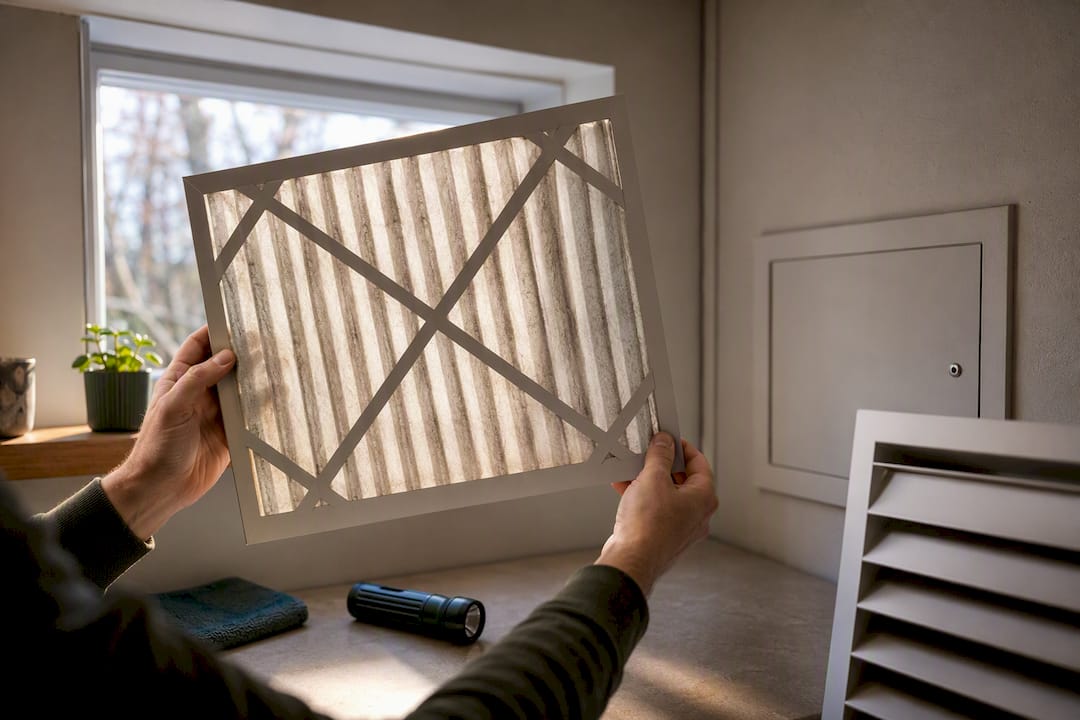
Before you touch anything else, take three safe steps: switch the thermostat off, pull the filter and look at it against a light source, and resist the urge to chip or scrape any ice you find. Chipping can puncture the thin aluminum fins or copper tubing, turning a filter problem into a refrigerant leak.
Why Do Evaporator Coils Actually Freeze?
Every cause of evaporator coil freezing traces back to one of two things: not enough warm air reaching the coil, or a refrigerant system that's out of balance. Once you know which category you're dealing with, the fix gets a lot more obvious.
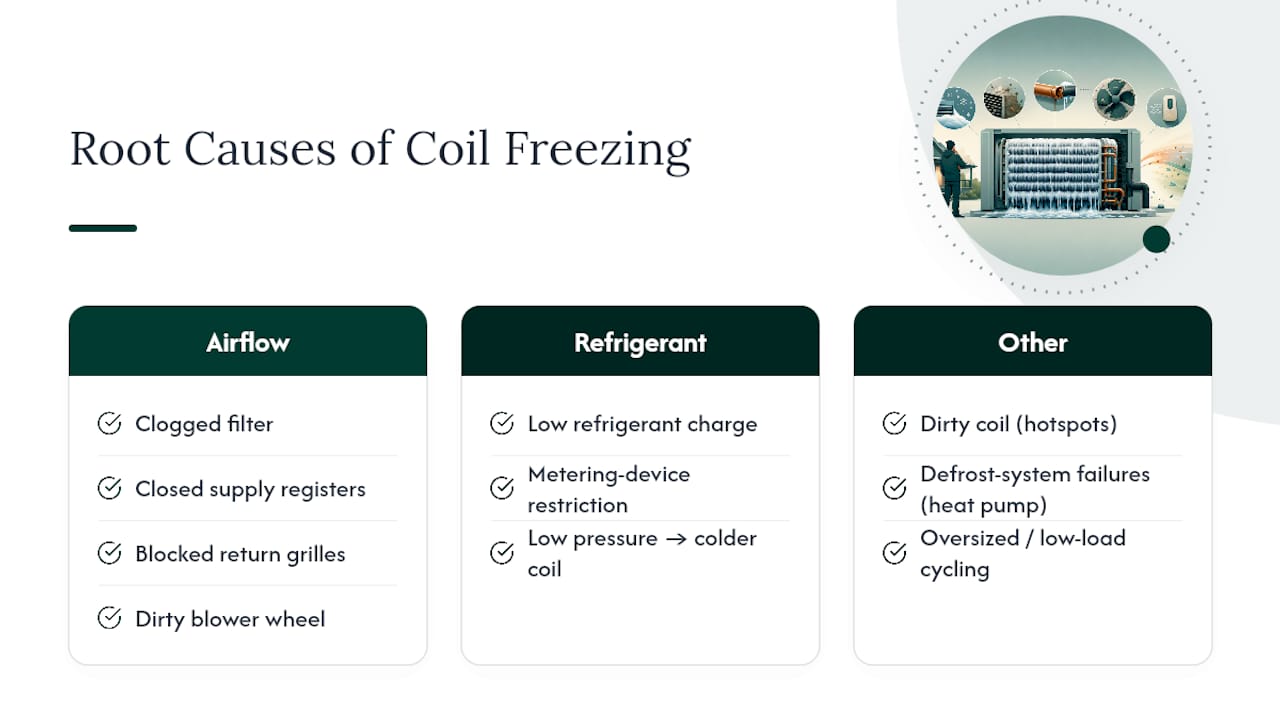
Restricted airflow is the single most common driver. A clogged filter, closed supply registers, blocked return grilles, or a dirty blower wheel all starve the coil of the room-temperature air it needs to stay above freezing. Less air moving across the coil lets its surface temperature drop below 32°F, and moisture in that air freezes right onto the metal. Trane's own troubleshooting guidance names airflow restriction as the top cause homeowners run into, and it's usually the cheapest to fix.
Low refrigerant or a metering-device restriction works differently but ends in the same place. When refrigerant charge is low, or a restriction in the expansion valve limits flow, the pressure inside the coil drops. Lower pressure means lower boiling temperature, and the coil runs colder than it should across its entire surface, not just in one spot. This one you can't fix with a new filter. It requires gauges, a licensed technician, and often a leak search.
A dirty coil creates hotspots. Dust and grime insulate parts of the coil unevenly, so heat transfer suffers in patches rather than across the whole surface. Frost tends to build unevenly too, which is one reason a coil freeze often looks patchy rather than uniform.
Defrost-system failures hit heat pumps specifically. A failed defrost control board, a bad outdoor sensor, or a stuck reversing valve means the unit never gets the signal to melt off normal frost. The ice just keeps accumulating cycle after cycle until it's a solid block.
Control and blower faults, along with equipment that's oversized or running in a low-load condition, round out the list. A system that cycles too briefly to move enough air, or a blower motor that's failing intermittently, can create exactly the same low-airflow conditions as a dirty filter.
One study on evaporator frosting found that frost buildup itself reduces the coil's own heat-transfer capacity, which means a minor freeze can snowball. Once ice forms, it insulates the coil further, airflow drops more, and the freeze accelerates. That's why catching a frozen evaporator coil early matters more than most people assume.
How Do You Safely Defrost an Evaporator Coil?
Shut the system down first. Set your thermostat to OFF, not just to a lower temperature, and if your system has an emergency heat setting, avoid using it until the coil is clear. Running the compressor against a solid layer of ice forces it to work against restricted refrigerant flow, and that's how a $30 filter problem turns into a $2,000 compressor replacement.
- Let it thaw naturally. Most residential coils clear within a few hours if you simply turn the system off and open the access panel for airflow. Overnight is often enough for a moderate freeze.
- Use lukewarm water only if you need to speed things up, and only on the indoor coil, never near electrical components. Skip the boiling water and skip the hair dryer on high heat, both of which can warp thin coil fins.
- Check and replace the filter while you wait. A filter that's gray, matted, or hasn't been changed in more than three months is often the whole story.
- Open every supply register and clear furniture or rugs blocking return grilles. Closed vents in unused rooms are a surprisingly common culprit.
- Manage the meltwater. Have towels or a shallow pan ready near the air handler, and check that the condensate drain isn't clogged, since a backed-up drain will just create a new puddle problem.
- Confirm the blower runs freely before restarting. If the fan sounds strained or doesn't move much air with the panel open, don't restart the system yet.
- Restart and watch it for the first hour. If frost starts reappearing quickly, you're not looking at a simple airflow fix anymore.
Never chip at ice with a screwdriver or chisel, and never pour boiling water on a coil. Both are the fastest ways to puncture a coil and convert a maintenance visit into a full coil replacement.
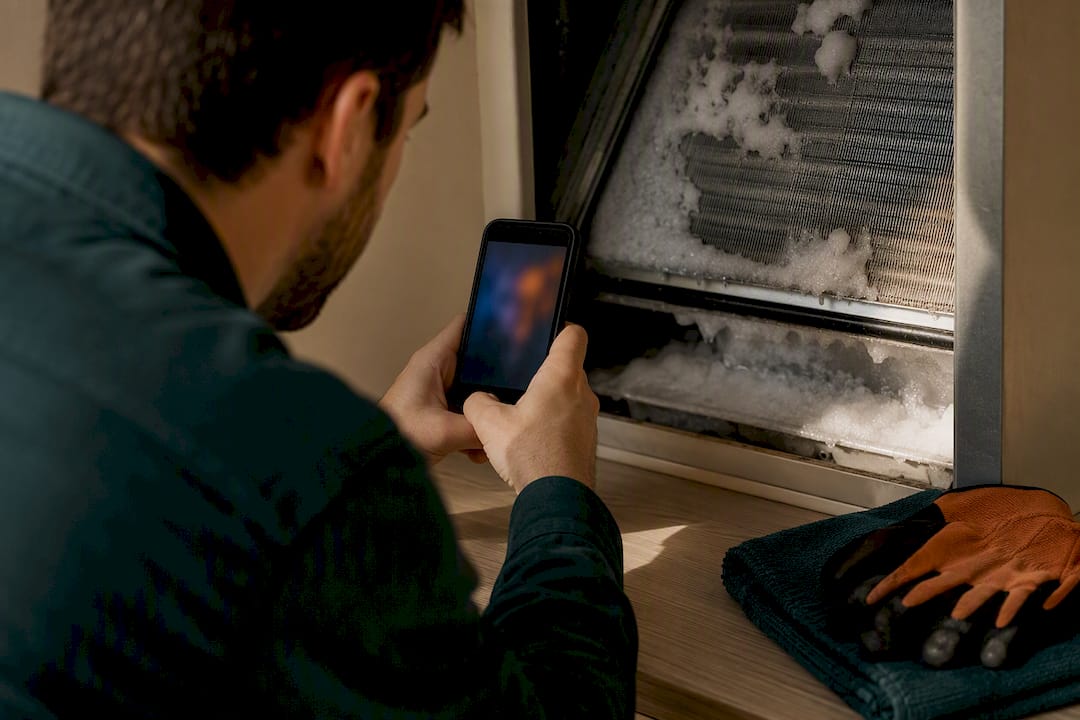
Pro Tip: Snap a photo of the ice pattern before you start thawing anything. If a technician needs to visit later, a picture of where the ice was thickest often points them straight to the cause, whether that's a blocked return near that spot or a refrigerant issue affecting one section of coil.
Once the coil is fully clear, a technician can measure airflow, check suction pressure, and confirm whether refrigerant charge is where it should be. That diagnostic step matters, since ice hides the real symptoms until it's gone.
When Should You Call a Licensed HVAC Technician?
Some signs mean stop troubleshooting and pick up the phone. A solid block of ice that doesn't respond to a few hours of natural thaw, ice that re-forms within a day or two of clearing it, or any hissing or bubbling sound near the lines all point to something beyond a dirty filter. Add a compressor that feels hot to the touch or a system that still won't heat or cool properly after a full thaw, and you're looking at a repair, not a reset.
Refrigerant leaks, defrost board replacements, reversing valve repairs, and any electrical fault inside the control board all require EPA-certified handling and specialized tools. These aren't weekend projects, and attempting them without the right equipment can void a warranty or cause a genuine safety hazard.
Before your technician arrives, gather a few details that speed up the visit:
- When you first noticed the ice and how fast it grew
- What mode the thermostat was set to (cooling, heating, fan only)
- The age and condition of your last filter change
- Any photos of the ice pattern, especially before you started thawing it
Handing over that timeline saves a technician from having to reconstruct the story from scratch, and it often shortens the diagnostic portion of the visit.
How Do You Stop an Evaporator Coil From Freezing Again?
Prevention comes down to two calendars: one for you, one for a professional. Miss either and the odds of a repeat evaporator coil freeze go up fast.
On your end, monthly habits matter most. Check the filter every 30 to 60 days and swap it before it looks gray. Walk the house and make sure no furniture, curtains, or rugs are blocking return grilles. If you notice airflow dropping at any register, address it that week rather than waiting for the next filter change.
On the professional side, an annual visit should include coil cleaning, blower-wheel cleaning, a refrigerant charge test, and, for heat pumps, a full defrost-control check. A technician can also verify static pressure across your ductwork and confirm head-pressure controls are functioning correctly for low-ambient operation, both of which matter more in Maine winters than in milder climates. If your current system struggles at very low outdoor temperatures, ask specifically about cold-climate heat pump options built for sub-zero performance.
| Task | Who does it | How often |
|---|---|---|
| Filter replacement | Homeowner | Every 30 to 60 days |
| Clear returns and registers | Homeowner | Ongoing, check monthly |
| Coil and blower cleaning | Licensed technician | Annually |
| Refrigerant charge test | Licensed technician | Annually |
| Defrost control inspection (heat pumps) | Licensed technician | Annually |
Keep this list handy if you're evaluating quotes from any technician. Any legitimate maintenance visit should touch every line on it.
Why Proper Sizing and Scheduled Care Prevent Repeat Freeze-Ups
Correct sizing matters more than most homeowners realize. A heat pump sized without a real heat-loss calculation often ends up oversized for the home's actual load, which pushes it into short, inefficient cycles. Those brief cycles don't move enough air across the coil to keep temperatures stable, and that low-load pattern is exactly the condition that predisposes a system to freeze.
Scheduled professional care closes the other gap. Deep cleaning removes the dust film that creates coil hotspots, blower tuning restores the airflow volume the coil was designed around, and a periodic refrigerant check catches a slow leak before it drops the charge low enough to freeze the coil outright.
Correct equipment sizing paired with a planned maintenance program materially reduces repeat freeze events by avoiding chronic low-load operation and keeping coils and blowers clean.
Hitamaine builds every installation around a documented heat-loss calculation rather than a rule-of-thumb size, and its care plans schedule the coil and blower cleaning that keeps airflow where it needs to be.
A Homeowner's Take: Weighing the Risk Against the Fix
Most freeze calls I hear about start the same way: someone kept running the AC on a warm afternoon, hoping it would push through. It didn't, and a $200 filter and cleaning visit turned into a compressor conversation. Run the quick checks first, but the moment ice comes back fast or you hear anything hissing, stop and call someone. Photograph what you see and jot down when it started. That five minutes of documentation is often the difference between a technician diagnosing your system in one visit or two.
— John
Get Your Coil Checked Before It Freezes Again
Some service providers offer more thorough assessments rather than generic tune-ups, helping identify whether issues stem from airflow, sizing mismatches, or other causes.
A one-time deep cleaning runs from $249 and covers the coil and blower cleaning that stops hotspots before they turn into ice. If repeat freezing has become a pattern, the Annual Cleaning Plan at $219 per year or the Maine Heat Pump Care Plan at $319 per year both build that inspection into your calendar automatically, so you're not the one remembering to book it. If sizing turns out to be the real issue, Hitamaine's installation planning process starts with an actual heat-loss calculation for your home before any equipment gets recommended. Service is confirmed by ZIP code before anything is scheduled, so you know upfront whether a visit is available in your area. Reach out through Hitamaine to get a free assessment scheduled.
Sources
- Help! My AC Evaporator Coil Is Frozen — Trane
- Cooling-coil / evaporator coil icing diagnosis and repair — Inspectapedia
- Heat pump outdoor unit frozen: what's normal and what's a problem — Thermostat & HVAC Helpers
- Furnaceprices
FAQ
How Do I Unfreeze My Evaporator Coil?
Turn the thermostat off and let the coil thaw naturally, which usually takes a few hours to overnight. Replace a dirty filter and clear blocked vents while you wait, and avoid chiseling ice or pouring boiling water on the coil, since either can damage the fins or tubing.
Can I Run My AC With Frozen Coils?
No. Running the system while the coil is iced up forces the compressor to work against restricted refrigerant flow, which can cause lasting compressor damage. Shut it off and thaw the coil fully before restarting.
Should I Turn My AC Off If It's Frozen?
Yes, immediately. Switching to OFF (not just a lower temperature) stops the compressor from straining and gives the coil time to thaw without further stress on the system.
Can a Frozen Evaporator Coil Be Repaired?
In most cases, yes. Once thawed, a technician can usually clean, repair, or recharge the system rather than replace the coil outright, unless the ice caused physical damage like a punctured tube. Hitamaine's preventive maintenance and troubleshooting service covers this kind of diagnostic and repair visit, with pricing confirmed after an assessment.